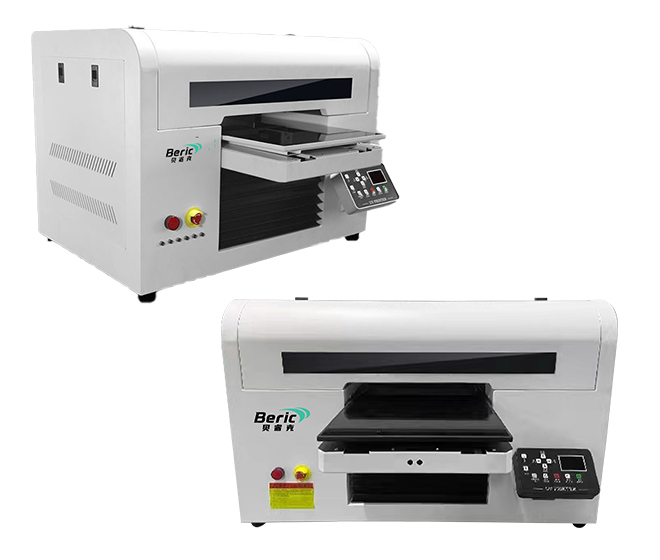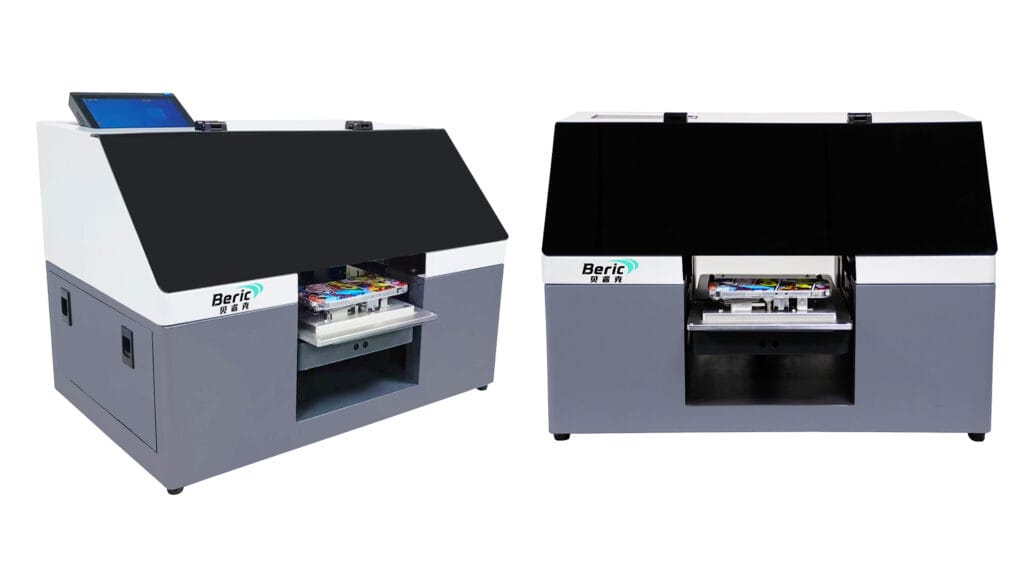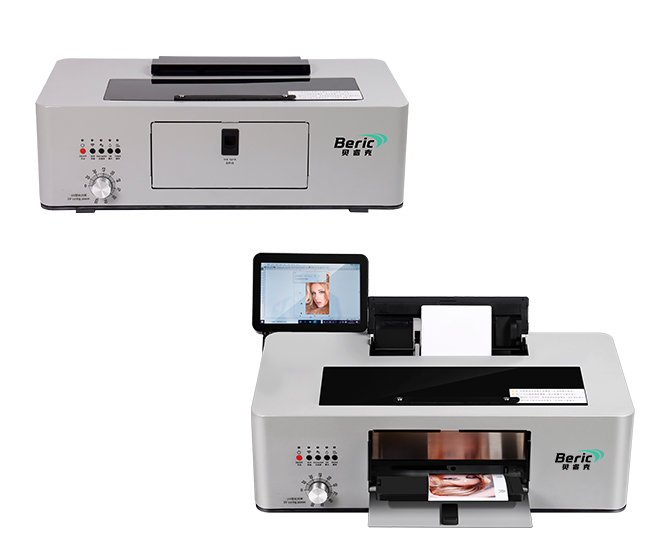
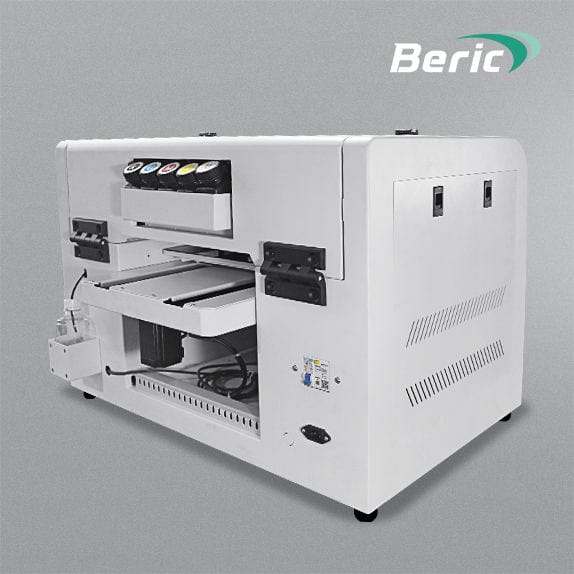
UV flatbed printers and large format inkjet printers (often called roll-to-roll printers or signage printers) are both widely used in printing applications, but they serve different purposes. Understanding the differences can help you choose the right machine for your business needs and improve efficiency, quality, and ROI.
Printing Mechanism and Substrate
UV flatbed printers print directly on rigid materials like acrylic, glass, metal, wood, or ceramic. The flat platform allows precise control over height and ink curing.
Large format inkjet printers are designed for flexible materials such as vinyl, canvas, fabric, or paper rolls. They are ideal for banners, wallpapers, and vehicle wraps.
If your business involves printing on hard substrates, a UV flatbed printer from Beric ensures consistent results. For flexible roll materials, a roll-to-roll printer is more suitable.
Print Quality and Detail
UV flatbed printers generally offer higher resolution and finer details, especially for small items like promotional products, phone cases, or decorative panels. They also support specialty inks like white, varnish, or metallic.
Large format printers prioritize speed and area coverage. While they can produce high-quality images, fine detail on small or thick materials may be limited.
Production Speed and Volume
Flatbed printers work well for low- to medium-volume production and customized printing, including one-off orders or batch production of different sizes.
Large format printers excel in high-volume production of banners, posters, and continuous roll printing. They are less flexible for individual customization on rigid items.
Maintenance and Operating Costs
Flatbed printers require regular printhead cleaning, UV lamp monitoring, and sometimes white ink circulation. Maintenance is straightforward for industrial machines like those from Beric.
Large format roll printers may require frequent media adjustments, printhead alignment, and occasional recalibration for long runs. Ink consumption may also be higher depending on substrate width.
Versatility and Applications
UV flatbed printers are ideal for:
- Custom gift items
- Acrylic signage and plaques
- Phone cases, awards, and trophies
- Short-run industrial prints
Large format printers are ideal for:
- Advertising banners
- Vehicle wraps
- Wallpaper and textile printing
- Large-scale posters
Conclusion
Choosing between a UV flatbed printer and a large format roll printer depends on your substrate type, production volume, and product focus.
- If you focus on customized hard material printing, a UV flatbed printer from Beric is the most reliable choice.
- If you mainly produce large-area flexible prints in high volume, a roll-to-roll large format printer is more suitable.
Understanding these differences ensures you invest in the right machine, reduce downtime, and improve product quality for your business.