Choosing between an A3 UV printer and a DTF (Direct-to-Film) printer can be challenging, especially for businesses entering the customized printing market. While both technologies produce vibrant, high-quality prints, they are designed for different materials, workflows, and business models.
This guide compares the two printing methods to help you determine which solution best fits your production needs.
What Is an A3 UV Printer?
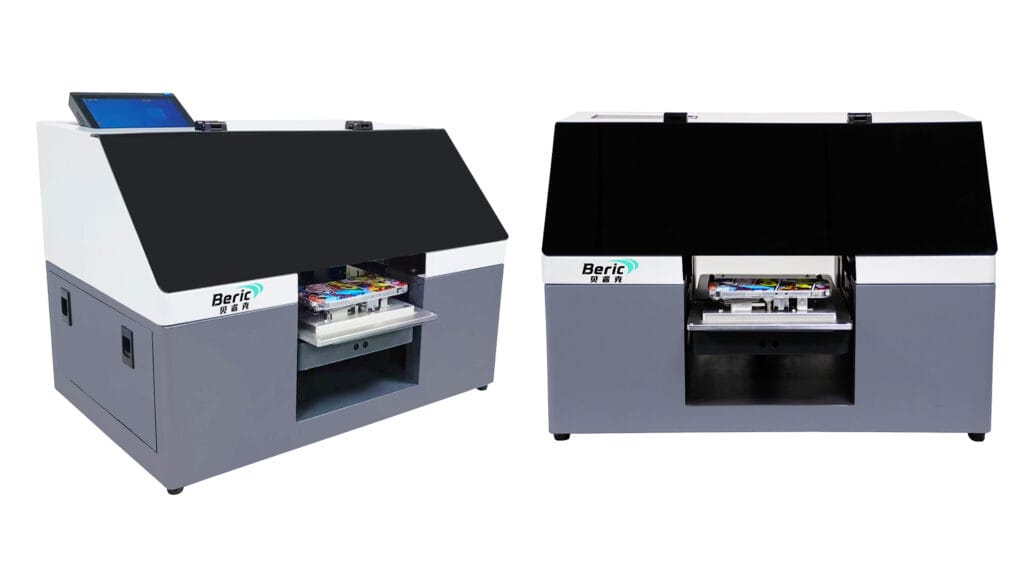
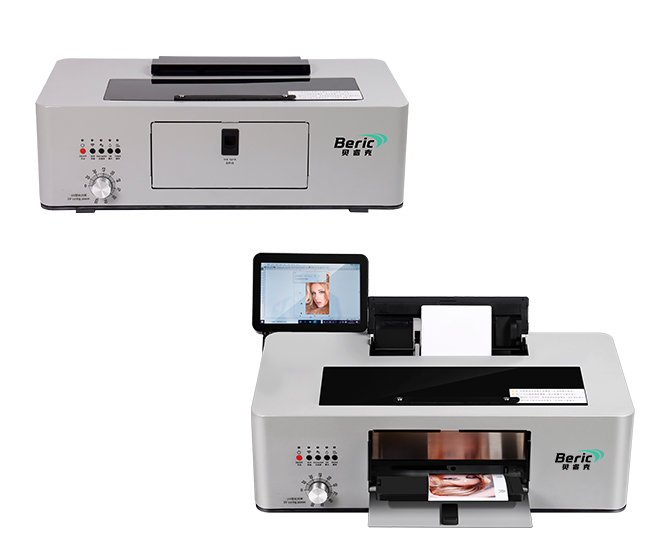
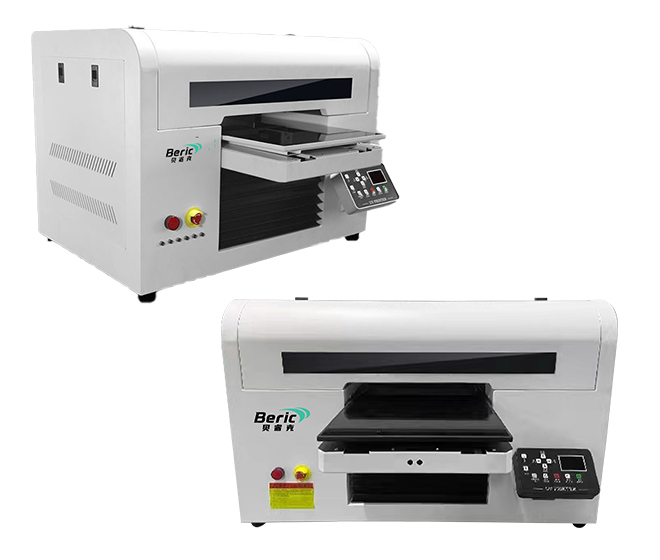
An A3 UV printer is a compact flatbed digital printer that uses ultraviolet (UV) light to instantly cure UV ink during printing. Because the ink cures immediately, it adheres to a wide variety of rigid and flexible materials without requiring heat transfer.
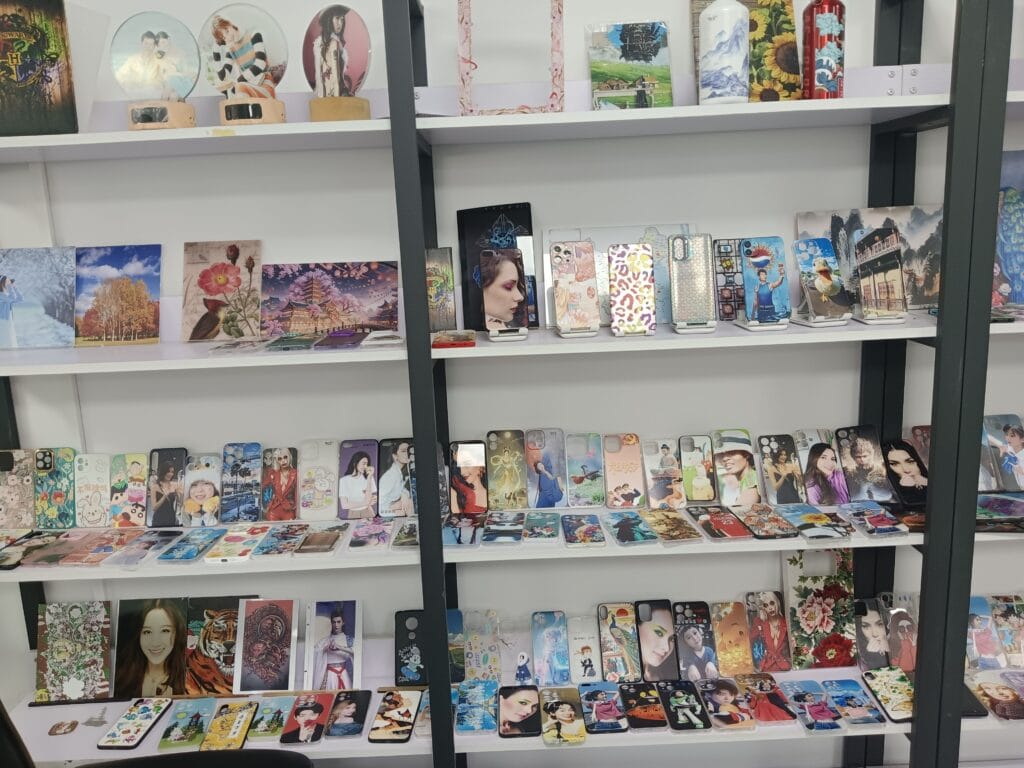
Common printable materials include:
-
Acrylic
-
Glass
-
Wood
-
Metal
-
Plastic
-
Leather
-
Ceramic tiles
-
PVC
-
Phone cases
-
Promotional gifts
A3 UV printers are widely used for personalized products, promotional items, signage, packaging samples, and industrial labeling.
What Is a DTF Printer?
A DTF printer (Direct-to-Film) prints designs onto a special PET film using textile pigment inks. The printed film is coated with hot-melt adhesive powder and then transferred onto fabric using a heat press.
DTF printing is primarily designed for textiles, including:
-
Cotton
-
Polyester
-
Blended fabrics
-
Hoodies
-
T-shirts
-
Tote bags
-
Caps
-
Sportswear
Unlike UV printing, DTF printing requires an additional heat transfer process before the design appears on the final product.
A3 UV Printer vs DTF Printer: Feature Comparison
| Feature | A3 UV Printer | DTF Printer |
|---|---|---|
| Primary Materials | Acrylic, glass, metal, wood, plastic, leather | Cotton, polyester, fabric |
| Printing Method | Direct printing | Film transfer |
| Ink Type | UV ink | Textile pigment ink |
| Curing Method | UV LED curing | Heat press transfer |
| White Ink | Yes | Yes |
| Varnish Effect | Yes | No |
| 3D Texture | Yes | No |
| Waterproof | Excellent | Good |
| Scratch Resistance | Excellent | Moderate |
| Production Workflow | Direct printing | Print → Powder → Cure → Heat Transfer |
Materials They Can Print
A3 UV Printer
An A3 UV printer offers exceptional material compatibility. It can print directly on:
-
Acrylic signs
-
Wooden crafts
-
Glass panels
-
Metal plates
-
Plastic products
-
Leather accessories
-
Ceramic tiles
-
PVC boards
-
Phone cases
-
USB drives
-
Gift boxes
This versatility makes UV printing ideal for businesses serving multiple industries.
DTF Printer
DTF technology focuses on textile decoration.
Typical products include:
-
T-shirts
-
Sweatshirts
-
Jerseys
-
Uniforms
-
Tote bags
-
Hats
-
Canvas products
If your primary business is garment customization, DTF is often the preferred solution.
Print Quality Comparison
A3 UV Printer
Advantages include:
-
High-resolution images
-
Glossy surface finish
-
White ink printing
-
Spot varnish effects
-
Raised 3D textures
-
Excellent color saturation
-
Fine detail reproduction
UV printing is especially suitable for premium customized products where appearance and durability are important.
DTF Printer
DTF printing offers:
-
Bright colors
-
Soft hand feel
-
Good stretchability
-
Strong wash resistance
-
Excellent fabric compatibility
For clothing applications, DTF generally provides better flexibility than UV printing.
Production Efficiency
A3 UV Printer
The workflow is straightforward:
-
Place the product on the printing table.
-
Print directly.
-
UV curing happens instantly.
-
Finished product is ready.
No transfer film or heat press is required.
DTF Printer
The production process includes several additional steps:
-
Print on PET film.
-
Apply adhesive powder.
-
Cure the powder.
-
Position the film.
-
Heat press.
-
Peel the film.
Although efficient for garment production, it involves more labor and equipment.
Cost Comparison
A3 UV Printer
Initial investment includes:
-
UV printer
-
UV inks
-
RIP software
Optional equipment:
-
Rotary attachment
-
Air purifier
-
Laminating accessories
Operating costs are relatively low because there is no transfer film or adhesive powder.
DTF Printer
Additional consumables include:
-
PET transfer film
-
Hot-melt adhesive powder
-
Textile inks
-
Heat press equipment
Consumable costs are generally higher due to the transfer process.
Which Businesses Should Choose an A3 UV Printer?
An A3 UV printer is ideal for businesses that produce:
-
Personalized gifts
-
Phone cases
-
Acrylic signs
-
Promotional products
-
Industrial labels
-
Packaging prototypes
-
Home décor
-
Wooden crafts
-
Glass decorations
-
Customized merchandise
Its ability to print on hundreds of materials provides greater business flexibility.
Which Businesses Should Choose a DTF Printer?
A DTF printer is better suited for:
-
Garment printing shops
-
T-shirt businesses
-
Sportswear manufacturers
-
Fashion brands
-
Uniform suppliers
-
Textile decoration companies
-
Custom apparel startups
If nearly all your products are fabric-based, DTF printing is a highly efficient solution.
Can One Business Use Both?
Absolutely.
Many successful customization businesses operate both technologies:
-
A3 UV Printer for rigid products such as phone cases, acrylic signs, and promotional gifts.
-
DTF Printer for apparel, bags, and fabric products.
This combination allows businesses to expand their product range and serve a wider customer base.
Final Thoughts
Both A3 UV printers and DTF printers offer excellent print quality, but they serve different markets.
Choose an A3 UV printer if your business focuses on rigid materials such as acrylic, wood, glass, metal, plastic, or promotional products. Its direct-print workflow, broad material compatibility, and premium finishes—including white ink and varnish effects—make it a versatile investment for product customization.
Choose a DTF printer if your core business is garment decoration. It delivers durable, vibrant prints on a wide range of fabrics and is ideal for T-shirts, hoodies, uniforms, and other textile products.
For companies looking to diversify their offerings, combining both technologies can provide maximum flexibility and create new revenue opportunities.
Frequently Asked Questions
Is an A3 UV printer better than a DTF printer?
Neither is universally better. An A3 UV printer is ideal for printing on rigid materials like acrylic, glass, wood, and metal, while a DTF printer is specifically designed for fabric and apparel printing.
Can an A3 UV printer print on T-shirts?
Standard UV printers are not intended for direct printing on fabric. For apparel decoration, a DTF printer or a UV DTF solution combined with transfer technology is generally more suitable.
Which printer has lower operating costs?
An A3 UV printer typically has lower consumable costs because it does not require transfer film, adhesive powder, or a heat press. However, actual costs depend on production volume and application.
Which printer is better for a startup?
If you plan to sell personalized gifts, promotional items, signs, or phone cases, an A3 UV printer is an excellent choice. If your business focuses on custom clothing, a DTF printer is likely the better investment.